Nico HulkenbergPlayer·Nico Hulkenberg’s Barcelona Grand Prix ends in one of the strangest retirements of the Formula 1 season, with a piece of gravel triggering the emergency kill switch on his Audi and shutting the car down while he runs in the points.
The German driver is holding tenth place when his car cuts out on the approach to Turn 13 on lap 29 at the Circuit de Barcelona‑Catalunya. With power gone, Hulkenberg can do little more than coast back to the pit lane, where the team is unable to restart the car and decides to retire it from the race.
According to Hulkenberg’s account after the finish, the chain of events starts just ahead of him between Turns 12 and 13. Liam LawsonPlayer·Liam Lawson runs wide into the gravel run‑off, throwing stones back across the racing line. One of those pieces of debris, Hulkenberg explains, strikes and activates the car’s external emergency switch – a safety device designed to allow marshals to cut the power instantly in an accident.

Once triggered, the system shuts the Audi down completely. Hulkenberg reports that every system goes dead and that he has no drive as he rolls down towards the pit entry, relying only on momentum to reach his garage. Audi later confirms via social media that the car encounters a problem as it enters the pit lane, cannot be restarted and is withdrawn while the team launches a post‑race investigation.
For Hulkenberg, the timing is particularly painful. Running on the edge of the top 10, he is on course for a valuable points finish before the freak incident unfolds. Later developments in the race only sharpen the sense of opportunity lost, as two cars from the leading group also retire in the closing stages, opening the door for those behind to climb further up the order.
From a technical and regulatory perspective, the episode highlights both the effectiveness and the vulnerability of modern Formula 1 safety systems. External kill switches are mandatory on all cars and must be easily accessible for trackside staff in emergencies. In Barcelona, however, that accessibility combines with an unlikely set of circumstances – a rival dipping into the gravel at precisely the wrong moment and debris flying with pinpoint accuracy – to end a driver’s race without contact, smoke or warning lights.
Lawson, driving for Racing BullsTeam·Racing Bulls, expresses his surprise when he learns of the cause of Hulkenberg’s retirement after the race. He acknowledges the bizarre nature of the incident and reacts with a mix of disbelief and humour, stressing that he had no idea his off‑track moment played a role in the Audi’s shutdown until it is relayed to him by the media.

The Barcelona weekend will be remembered primarily for events at the front, but in the midfield it offers a rare case study in how fine the margins can be in grand prix racing. A few metres of gravel, a split‑second trajectory and the exposed location of a safety switch together transform a solid, points‑paying drive into an early exit.
For Audi and Hulkenberg, the focus now turns to understanding exactly how the gravel reached the switch and whether small design or shielding changes can prevent a repeat. For the rest of the paddock, the incident is a reminder that in modern Formula 1, not every retirement comes from a dramatic crash or a failing component. Sometimes, a single stone is enough to end a race.
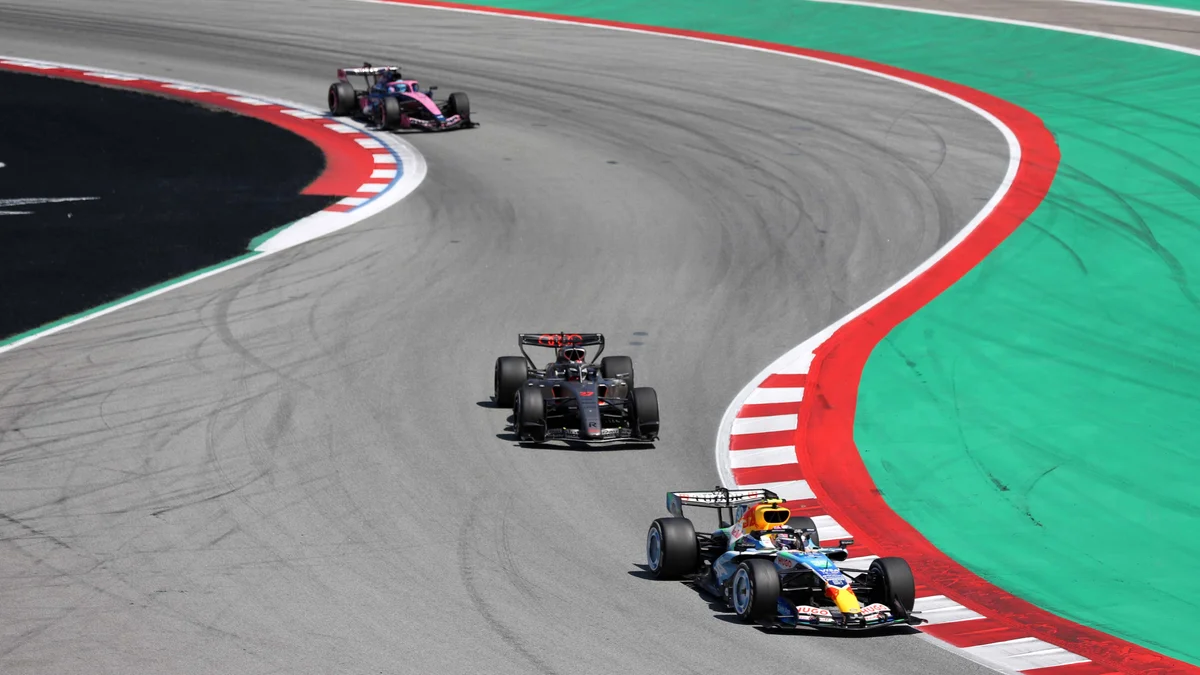
Liam Lawson (Racing Bulls) and Nico Hulkenberg (Audi) race at the F1 Barcelona Grand Prix. ZUMA Press Wire/IMAGO
ZUMA Press Wire/IMAGOThis article was generated by AI (sonar-pro). Learn more.