Charles LeclercPlayer·Charles Leclerc leaves the stewards’ office without a penalty after being investigated for impeding Nico HülkenbergPlayer·Nico Hülkenberg during final practice at the Barcelona Grand PrixCompetition·Barcelona Grand Prix, in a decision that again puts Formula 1’s officiating and team communication under the spotlight.
The Ferrari driver is summoned to explain an incident in FP3 in which he ends up momentarily delaying Hülkenberg’s Audi on the approach to a flying lap. The review establishes that Leclerc is in the middle of overtaking Lewis HamiltonPlayer·Lewis Hamilton at low speed when Hülkenberg arrives behind the pair, catching them as they run out of phase with the rest of the field.
With cars bunching up in preparation for performance runs, the closing speeds are significant. Leclerc clears Hamilton but, with limited room to move and little time to react, he briefly keeps Hülkenberg behind him through the section. The episode is captured on the world feed and quickly circulates on social media, reinforcing how fine the margins are in modern practice sessions.

The key factor in the hearing is information flow rather than driver intent. Ferrari confirms it does not warn Leclerc that another car is rapidly approaching from behind. According to the team’s explanation to the stewards, its standard procedure is to alert drivers only when a car behind is on a clear, fast lap, rather than during slower build-up phases.
That protocol proves crucial. The stewards accept that Leclerc has limited awareness of Hülkenberg’s approach and that both he and Hamilton are circulating at relatively low speed. They therefore stop short of issuing a sporting penalty, opting instead for a formal warning to Ferrari over its radio communication processes.
The outcome underlines how the FIA currently balances responsibility between driver and team. In modern Formula 1, teams monitor traffic via GPS and timing data, then guide their drivers through gaps in the pack. When that chain of information breaks, the stewards have the option to target the team rather than immediately sanction the individual.
For Leclerc, the decision removes the threat of grid penalties or reprimand points before qualifying and the race. For Hülkenberg and Audi, the incident is an unwelcome disruption to final preparations, but not one the officials deem severe enough to alter the starting order.

More broadly, the case feeds into an ongoing conversation about consistency. Teams and drivers regularly ask for clear, predictable application of impeding rules, particularly at traditional circuits like Barcelona where traffic in the final sector can be intense. A warning to Ferrari, rather than a penalty for Leclerc, suggests the stewards are weighing context and communication as carefully as track position.
As the weekend moves into its decisive sessions, the message from race control is measured but firm. Practice may be about preparation, but the risk-reward equation remains unforgiving: every slow lap unfolds in live traffic, and every missed radio call can end up under review.
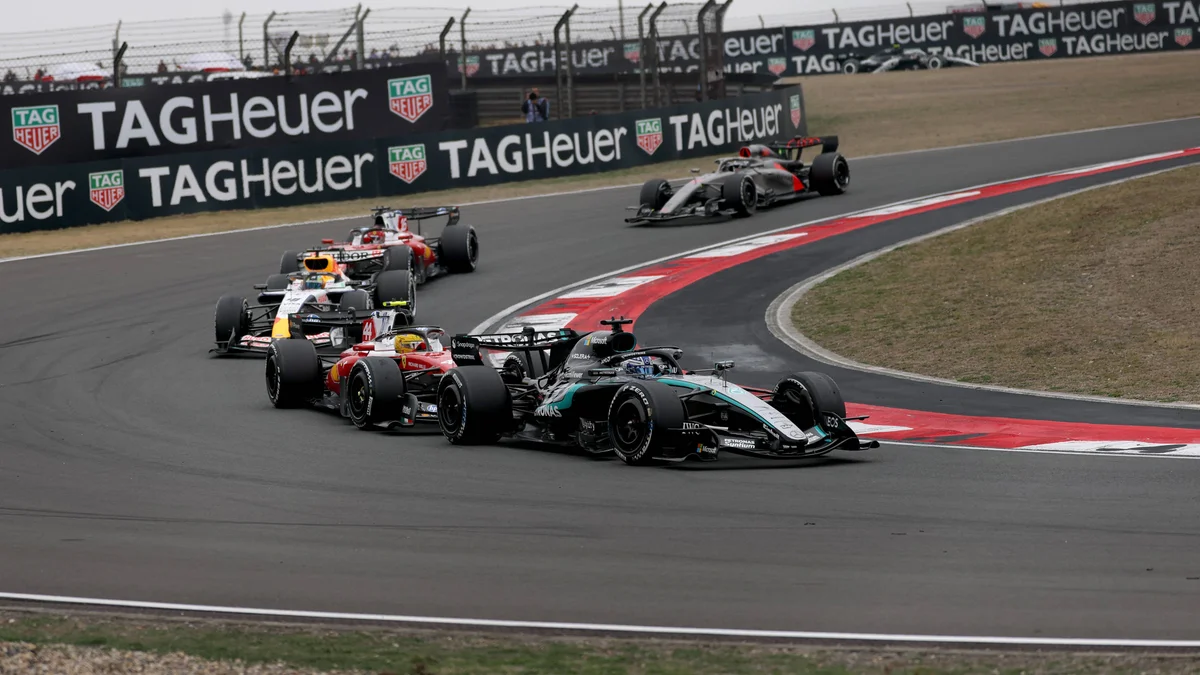
F1 drivers George Russell, Lewis Hamilton, Arvid Lindblad, Charles Leclerc, and Nico Hülkenberg at China GP. DeFodi Images/IMAGO
DeFodi Images/IMAGOThis article was generated by AI (sonar-pro). Learn more.