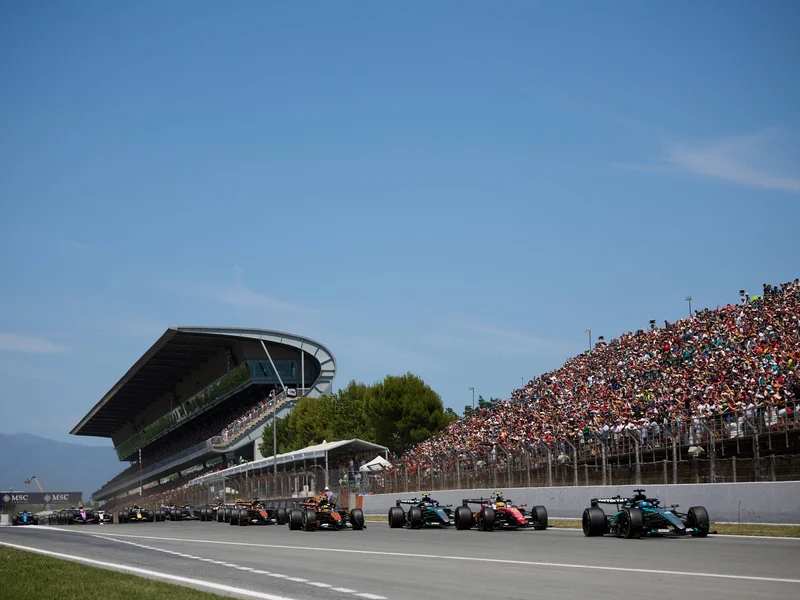
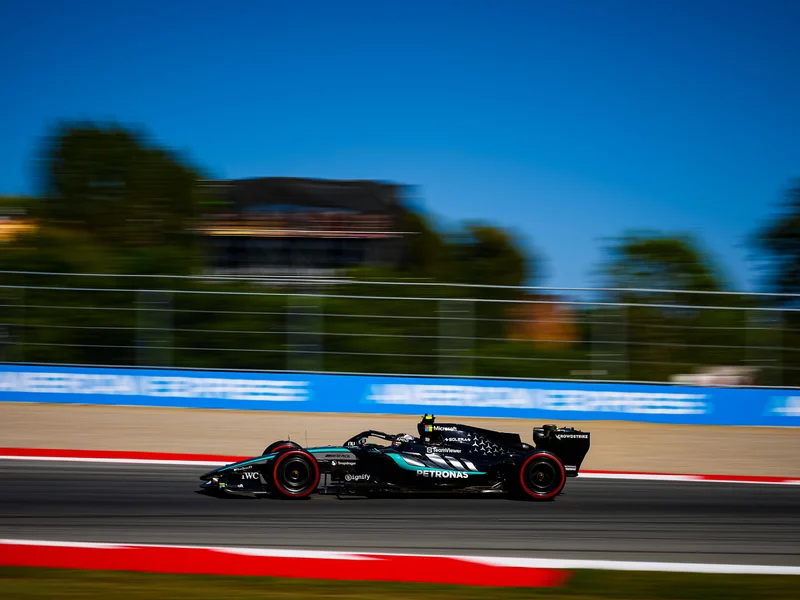
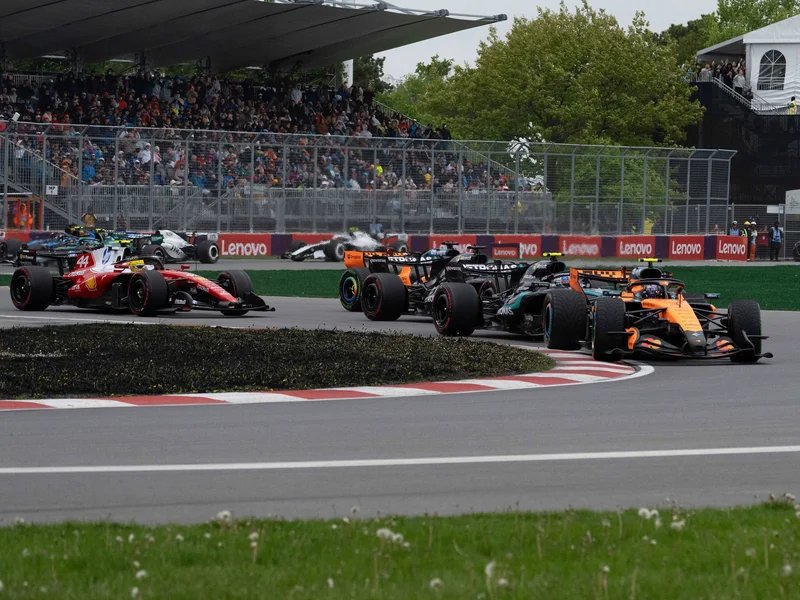
Andrea Kimi AntonelliPlayer·Andrea Kimi Antonelli’s lead in the Formula 1 world championshipCompetition·Formula 1 World Championship survives a difficult Sunday in Barcelona, but the aftermath of the Spanish Grand PrixCompetition·Spanish Grand Prix adds fresh scrutiny to race control and the demands on the sport’s youngest stars.
The Italian, competing for Mercedes, fails to see the chequered flag after retiring shortly before the end of the race. Because he covers more than 90% of the race distance, he is still classified in the final results. Post-race, stewards hand Antonelli a five-second time penalty for accumulating too many unjustified track-limits violations during the Grand Prix.
Antonelli receives an official warning in the form of a black-and-white flag before the halfway point of the race, after which he appears to keep his car within the white lines. Only later do stewards determine that one of his earlier excursions had been logged with a delay, meaning the warning comes after his fourth offence rather than the usual third. The procedural slip does not invalidate the underlying infringements, and race control rules that the penalties for repeated violations must still apply.

Crucially for the title picture, the sanction does not change Antonelli’s final classification. His retirement leaves him out of the points regardless, and the additional five seconds have no sporting impact on his result. The ruling also confirms that the time penalty will not carry over to the next round in Austria, so there will be no grid drop hanging over the championship leader when the season moves to the Red Bull Ring.
While Antonelli escapes further damage in the standings, the incident underlines the fine margins for a young driver racing under intense pressure at the top of the sport. Every lap at this level is monitored, every mistake recorded, and the episode in Barcelona serves as a reminder that even future champions must adapt quickly to the full rigour of Formula 1’s track-limits regime.
Further down the order, the stewards’ decisions significantly reshape the midfield battle. Franco ColapintoPlayer·Franco Colapinto, driving for Alpine, receives a 10-second time penalty and one penalty point on his licence for failing to slow sufficiently under a single waved yellow flag. Officials acknowledge that the Argentine lifts off the throttle when he approaches the incident but judge the reduction in speed to be inadequate under the regulations.
Colapinto crosses the line in eighth place on the road after a solid drive into the lower points, but the additional 10 seconds drop him to tenth in the final classification. The change promotes Liam LawsonPlayer·Liam Lawson and Arvid LindbladPlayer·Arvid Lindblad of Racing BullsTeam·Racing Bulls, who move ahead of the Alpine in the official result and collect more points than initially expected.

For Alpine, the sanction turns what looked like a valuable step in the team’s recovery into a more modest return. For Racing BullsTeam·Racing Bulls, it is a welcome windfall in a tightly packed midfield, where one steward’s call can swing several positions and reshape the momentum of a campaign.
The combined effect of the Antonelli and Colapinto penalties feeds into a broader conversation that has been running through recent seasons: consistency and clarity in stewarding. Track limits at permanent circuits such as Barcelona and the enforcement of yellow-flag zones remain among the most contested issues in the paddock. Teams ask for absolute transparency in how warnings are issued and how quickly infringements are processed, while drivers balance the need to push the limits with the obligation to leave a margin for safety and regulation.
Barcelona’s post-race reshuffle does not overturn the outcome at the front of the field, where Lewis HamiltonPlayer·Lewis Hamilton’s victory for Ferrari stands as the headline sporting story of the weekend. It does, however, sharpen the spotlight on race control ahead of a demanding stretch of the calendar.
Next comes Austria, a circuit where track limits have already become synonymous with long lists of deleted lap times and post-race adjustments. Antonelli, still leading the championship despite his Barcelona setback, will arrive under pressure to tighten execution in qualifying and the race. Colapinto and Alpine, meanwhile, must absorb the cost of a lost haul in Spain while demonstrating they can manage risk more effectively when the yellow flags fly.
As the season moves from Barcelona to the Styrian hills, the message is clear: in modern Formula 1, the race does not end at the flag. It ends when every lap, every sector, and every decision has been reviewed—and sometimes revised—long after the engines fall silent.
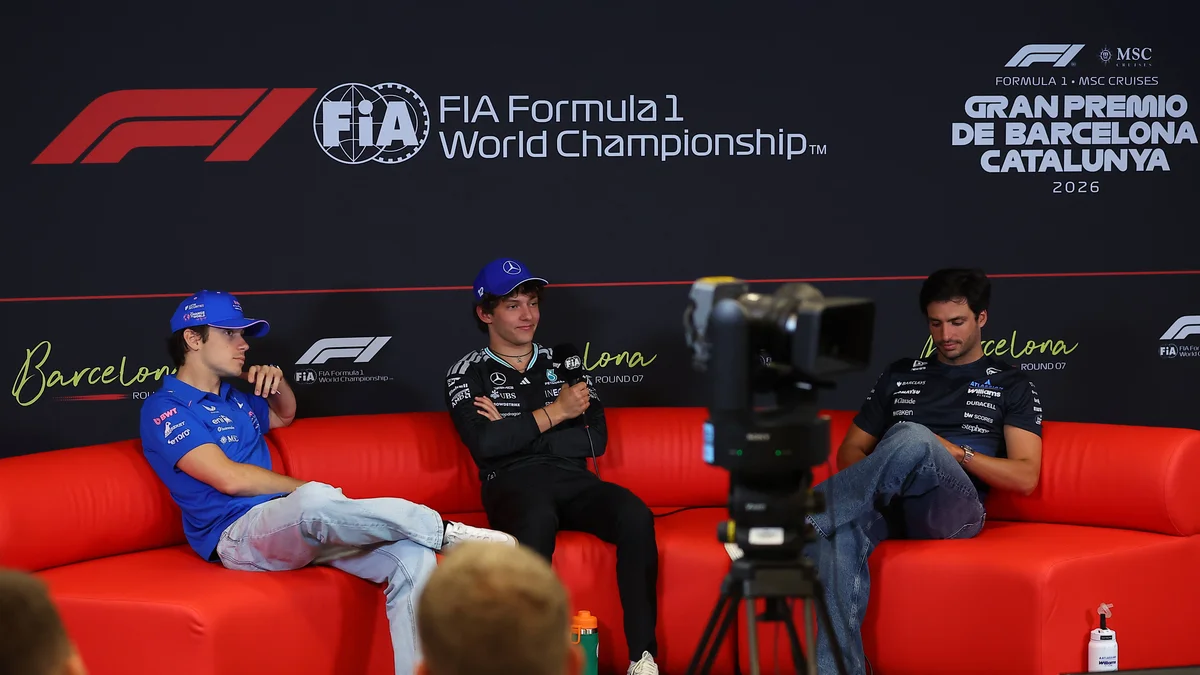
Andrea Kimi Antonelli, Franco Colapinto, and Carlos Sainz during the Spanish Grand Prix. (IPA Sport/IMAGO)
IPA Sport/IMAGOThis article was generated by AI (sonar-pro). Learn more.