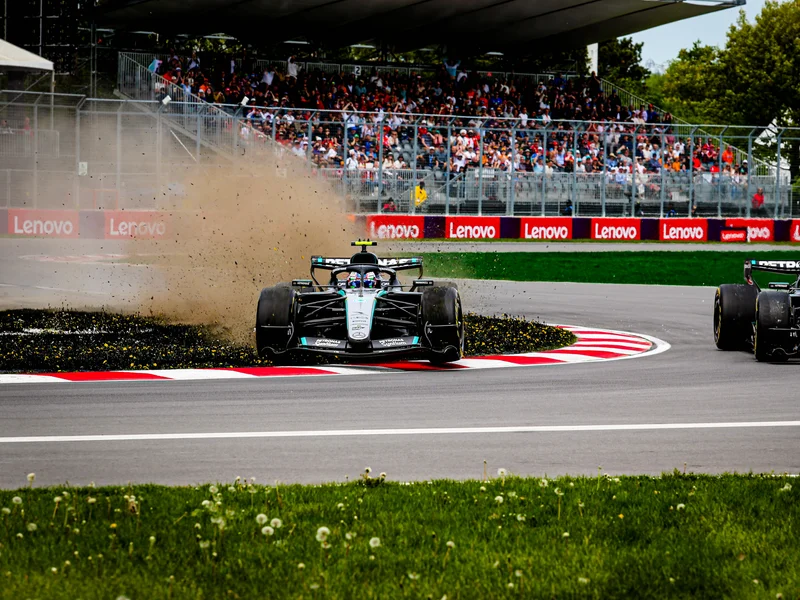
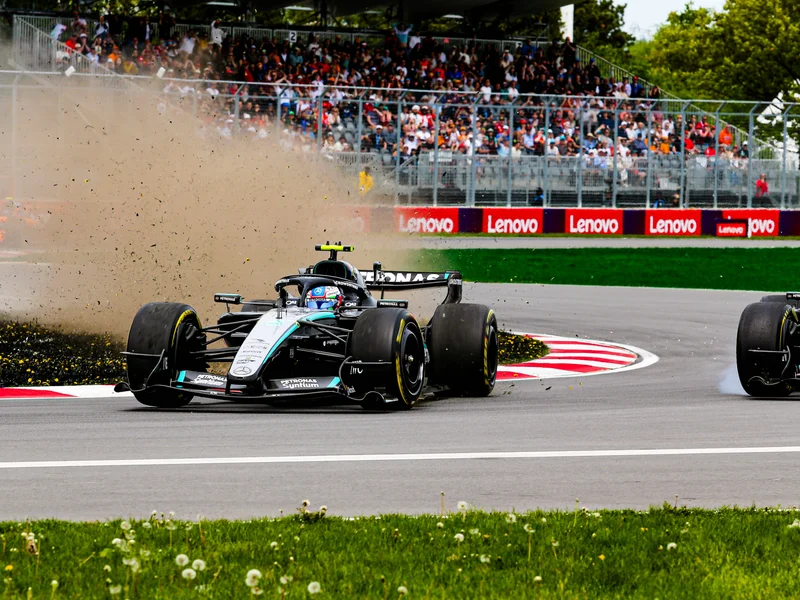
Guenther SteinerCoach·Guenther Steiner has moved to steady one of the fiercest storylines in the Formula 1 driver market, insisting that Mercedes does not need to pair Max VerstappenPlayer·Max Verstappen with Andrea Kimi AntonelliPlayer·Andrea Kimi Antonelli despite mounting speculation over the Dutchman’s future.
The former Haas team principal, now involved in MotoGP with Tech3 KTM, addresses the prospect of Verstappen one day switching to Mercedes and lining up alongside the Italian prodigy. In his view, the Brackley team already has its long-term cornerstone and should avoid creating an unstable superstar pairing.
Steiner argues that Mercedes holds one of the grid’s most coveted assets in Andrea Kimi AntonelliPlayer·Andrea Kimi Antonelli, whose rapid rise – including a run of recent victories – has reinforced the sense that the team is building its next era around him. Recent images from Montreal show Antonelli as race winner in conversation with Max VerstappenPlayer·Max Verstappen in the post‑race press conference, a snapshot of the generational overlap that is fuelling the current debate.

The rumour mill has linked Verstappen with a future move away from his current employer, inviting natural questions over how Mercedes might respond if the multi‑title winner ever became available. Steiner’s answer is clear: he believes Toto WolffCoach·Toto Wolff will not engineer a scenario that places Verstappen and Antonelli in direct, permanent conflict within the same garage.
In his comments, Steiner underlines two key ideas. First, that Verstappen remains the benchmark driver in the present. Second, that Mercedes, in Antonelli, may already have the driver capable of surpassing that standard in the years to come. From that standpoint, taking on Verstappen would be a choice rather than a necessity.
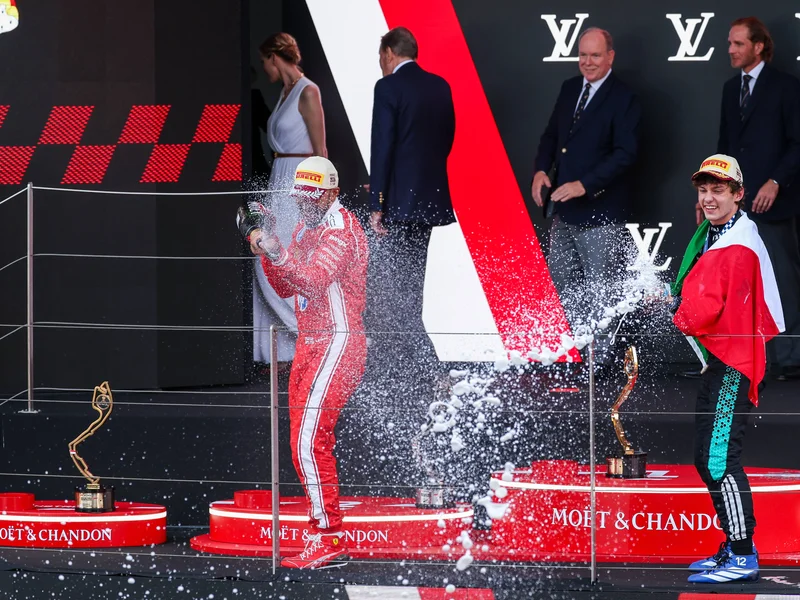
That perspective resonates strongly with the team’s recent trajectory. Antonelli’s form – highlighted by a five‑race winning streak capped by victory in Monaco – suggests Mercedes has rediscovered a clear internal reference point at exactly the moment when the wider market is bracing for change. The Italian’s performances have re‑energised the fanbase as well; in one recent poll on the Barcelona Grand Prix, he draws the largest share of votes for the win ahead of established names such as George RussellPlayer·George Russell, Charles LeclercPlayer·Charles Leclerc, Lewis HamiltonPlayer·Lewis Hamilton and Verstappen.
Steiner also touches indirectly on the challenge of managing two alpha drivers under one roof. Modern Formula 1 offers several precedents of dominant pairings that delivered titles but also damaged internal stability. His message is that Mercedes, after years of intense intra‑team battles in previous eras, has little incentive to recreate that environment just as it appears to be stabilising around a new lead figure.

For Wolff and Mercedes, the strategic question is therefore less about whether Verstappen is an attractive proposition – his record answers that – and more about whether his arrival would accelerate or complicate the team’s long‑term plan. With George RussellPlayer·George Russell already established and Antonelli emerging as a central pillar, Steiner suggests the priority is continuity and growth rather than a short‑term power play in the market.
The comparison with earlier management cycles at top teams is unavoidable. In the past, dominant outfits have faced a similar fork in the road: double down on one clear leader supported by a complementary team‑mate, or pursue a star‑studded line‑up and accept the political and operational costs that come with it. Steiner’s assessment places Mercedes firmly in the first camp, at least for now.
What comes next depends less on hypotheticals and more on contractual realities and competitive performance over the coming seasons. Verstappen’s future will remain a point of discussion as long as he continues to set the pace at the front. Antonelli, meanwhile, has the opportunity to convert early promise into sustained authority, giving Mercedes every reason to keep its focus in‑house.
For the moment, Steiner’s stance offers a clear external reading of Mercedes’ priorities: protect the trajectory of the sport’s standout young talent, avoid unnecessary internal flashpoints, and let results – rather than speculation – define whether this is the start of another extended Silver Arrows era.
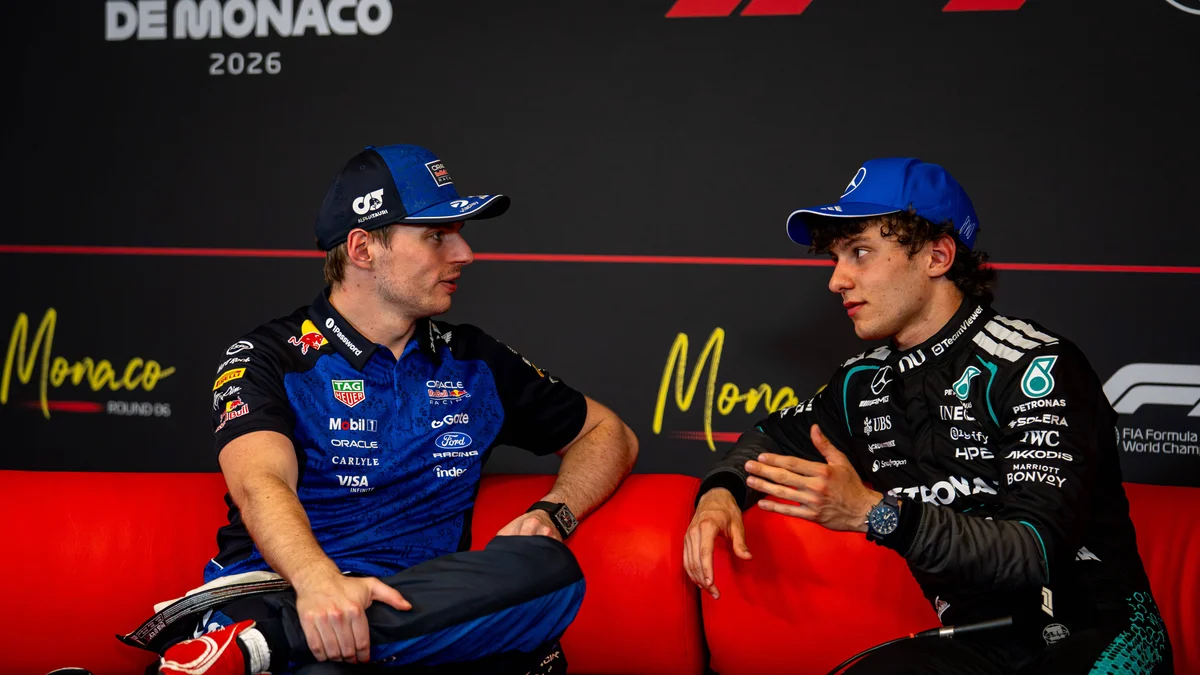
Andrea Kimi Antonelli and Max Verstappen at the F1 Monaco Grand Prix 2026 press conference. SOPA Images/IMAGO
SOPA Images/IMAGOThis article was generated by AI (sonar-pro). Learn more.