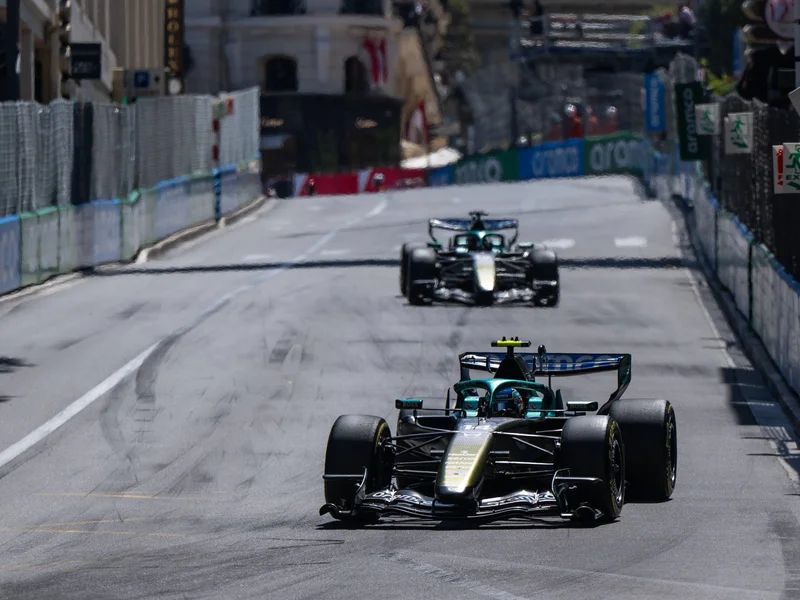
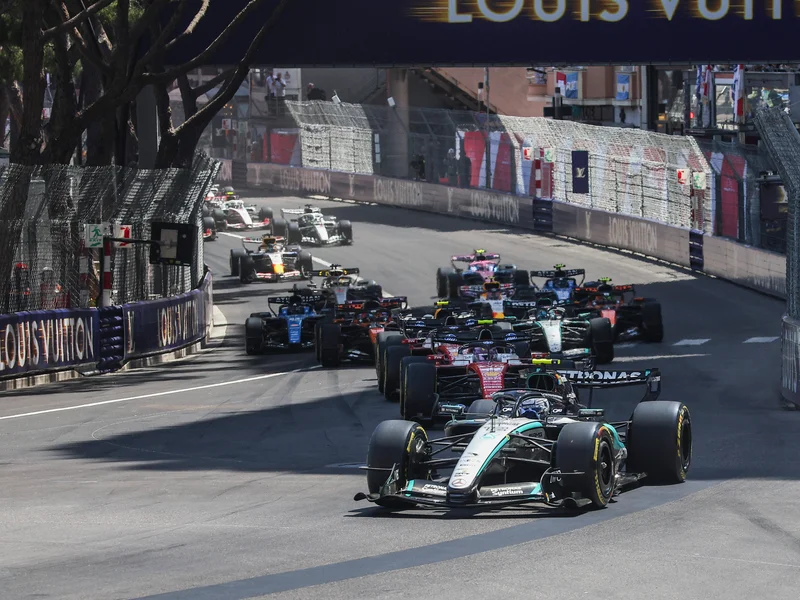
Aston MartinTeam·Aston Martin has identified unstable engine braking and erratic power delivery as the key factors behind Lance StrollPlayer·Lance Stroll’s late-race crash at the Monaco Grand PrixCompetition·Monaco Grand Prix, shifting the focus from driver mistake to a deeper reliability and drivability concern.
The Canadian went into the barriers at the final corner 18 laps from the finish, triggering a chaotic closing phase on the streets of Monte Carlo. Initial replays suggested a loss of rear grip on the dirty outside line, but Stroll was clear after the race that the cause lay in how the power unit behaved under braking and downshifting, not in the condition of the track surface.
According to team explanations in the days since, Aston MartinTeam·Aston Martin had asked both of its drivers to run lower gears at corner entry to maximise energy recovery from the hybrid system. The instruction aimed to boost performance over a full stint, but it came with a trade-off: more aggressive engine braking and greater sensitivity when the car transitioned from braking to turning in.

That balance proved fragile in Monaco’s unforgiving final corner. When Stroll tried a lower gear on entry, the powertrain reportedly delivered a sudden change in engine braking – a kind of shove from behind – that nudged the car off the ideal line. With only centimetres to spare between racing line, marbles and the barrier, he ran onto loose debris, lost rear grip and had nowhere to go.
The incident did not come in isolation. Aston MartinTeam·Aston Martin has acknowledged that both drivers have complained throughout the season about unpredictable behaviour when shifting down through the gears, especially in low-speed braking zones. Those complaints centre on inconsistent torque and engine-braking response, which can either momentarily unload the rear tyres or over-rotate the car without warning.
International reports describe the issue as a long-standing engine-braking problem within Aston MartinTeam·Aston Martin’s package, rather than a one-off mechanical failure in Monaco. Stroll is cited as saying the effect has been present all year, with the car occasionally feeling as if it is being pushed forward or having its rear wheels momentarily locked by the power unit as the hybrid system harvests energy.
On a conventional permanent circuit, drivers can sometimes absorb that unpredictability with run-off areas and a wider margin for error. In Monaco, where Armco replaces asphalt and every misjudgement is punished instantly, that same behaviour carries a far higher risk. At the final corner in particular, drivers commit while still managing steering lock, throttle pickup and residual engine braking, leaving little time to correct a sudden change in balance.

From a safety perspective, the episode underlines how tightly modern Formula 1 machinery links software, hybrid deployment and mechanical grip. Drivers rely on consistent engine-braking maps to judge their braking points and steering inputs corner after corner. When the system behaves differently from one lap to the next, the margin between a clean exit and contact with the wall becomes vanishingly small.
For Aston MartinTeam·Aston Martin, the Monaco crash crystallises a problem that has been simmering in the background. The team now faces the task of refining gearbox calibration and hybrid control so that torque delivery and engine braking remain predictable, even when drivers experiment with lower gears for performance. That work will be critical not only to avoid repeat incidents on street circuits, but also to rebuild driver confidence under braking across the calendar.
With another race weekend approaching, the question is not whether Aston MartinTeam·Aston Martin understands what went wrong in Monte Carlo, but how quickly it can convert that understanding into a more stable car. Stroll’s crash has become a case study in how a subtle, season-long drivability issue can suddenly dictate the outcome on one of Formula 1’s most demanding stages.
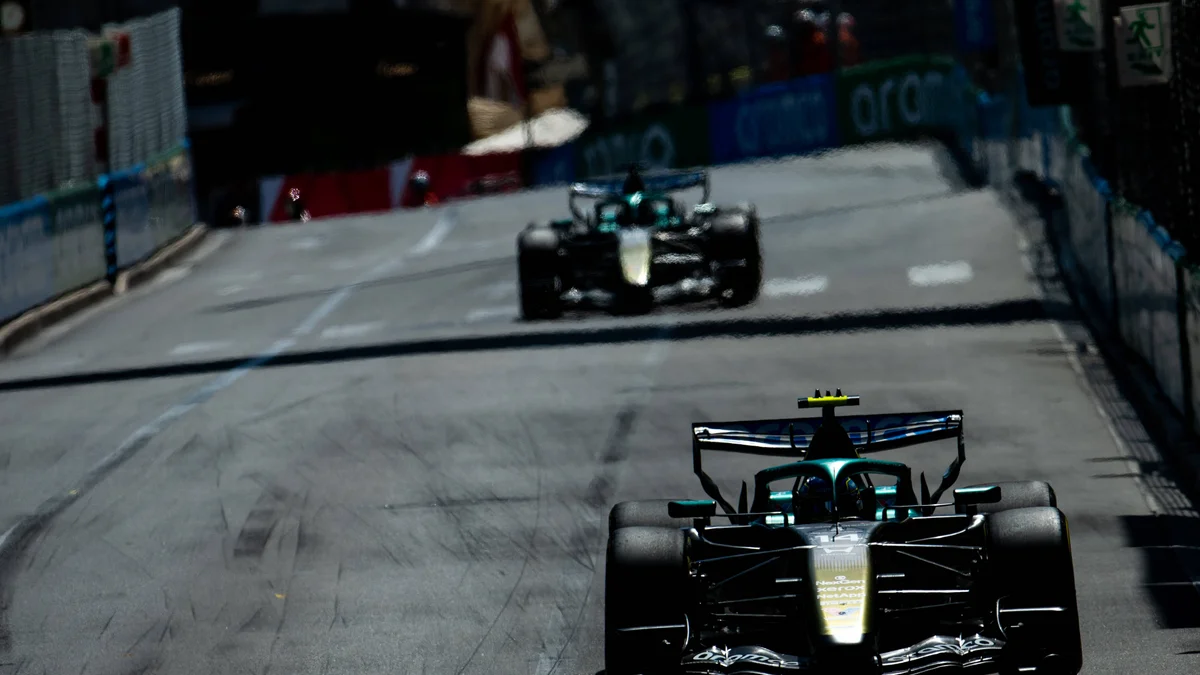
Fernando Alonso and Lance Stroll in their Aston Martin F1 cars at the Monaco Grand Prix. Nordphoto/IMAGO
Nordphoto/IMAGOThis article was generated by AI (sonar-pro). Learn more.