James VowlesCoach·James Vowles throws WilliamsTeam·Williams’ weight behind McLarenTeam·McLaren and Red Bull in the growing dispute over Pierre GaslyPlayer·Pierre Gasly’s reinstated podium in Monaco, turning a technical error in the pit lane into one of the season’s most pointed political flashpoints.
The controversy begins in Monte Carlo, where several drivers receive penalties for speeding in the pit lane. Most of those sanctions are served during the race, reshaping strategies in a grand prix where track position is usually decisive. After the chequered flag, however, the situation shifts decisively when it emerges that Formula One Management has miscalculated the length of the pit lane, skewing the measurement of average speeds.
That mistake proves crucial for AlpineTeam·Alpine and Gasly. The team appeals two separate five‑second penalties that originally cost the French driver a top-three finish. With the pit-lane data deemed unreliable, those sanctions are overturned and Gasly is restored to third place. AlpineTeam·Alpine leaves Monaco with silverware; rivals leave with questions.

It is those questions that now fuel a coordinated response from further up the grid. According to Sportal.bg, McLarenTeam·McLaren and Red Bull are actively considering a formal protest against the decision to hand Gasly back the podium, arguing that the way the error has been corrected raises broader issues of consistency and competitive fairness. Vowles publicly backs that stance, describing support for a challenge to the result as the right course of action.
The WilliamsTeam·Williams chief’s concern stretches beyond a single trophy. By pointing to George RussellPlayer·George Russell and Oscar PiastriPlayer·Oscar Piastri as drivers whose own results might have been altered under a different interpretation, he underlines how many competitors sit on the fault line of this ruling. If one penalty can be erased due to a measurement error, rival teams want clarity on why comparable cases do not receive the same treatment.
At its core, the dispute is about trust in the system. Teams accept that stewards will sometimes make unpopular calls, but they expect the underlying procedures to be robust and transparent. A miscalculated pit-lane length, and the subsequent need to retroactively adjust penalties, exposes a vulnerability in that process. For outfits fighting over podiums and crucial midfield points alike, the margin for error is already slim; administrative uncertainty only compounds the pressure.
The brewing alliance between WilliamsTeam·Williams, McLarenTeam·McLaren and Red Bull also reveals the shifting political landscape in the paddock. Front-running and midfield teams, usually divided by their own interests, find common ground when regulatory grey areas threaten to distort the competitive order. AlpineTeam·Alpine, for its part, stands by the appeal that restored Gasly’s result, arguing that the team simply pursued the remedies available within the regulations after a procedural error not of its making.

What happens next rests with the stewards and governing bodies, should McLarenTeam·McLaren, Red Bull and any supporting teams move from words to a formal protest. They will need to decide whether the Monaco podium stands as corrected, or whether a further revision is necessary to restore confidence in how penalties are applied when official systems fail.
For now, the Monaco result remains on the books, Gasly keeps his third place, and the sport shifts its immediate focus to the Barcelona weekend. Yet the debate over this single podium reaches far beyond one Sunday in Monte Carlo. It has become a test case for how Formula 1 handles its own mistakes, and whether teams can rely on consistent treatment when the timing screens and pit-lane sensors get it wrong.
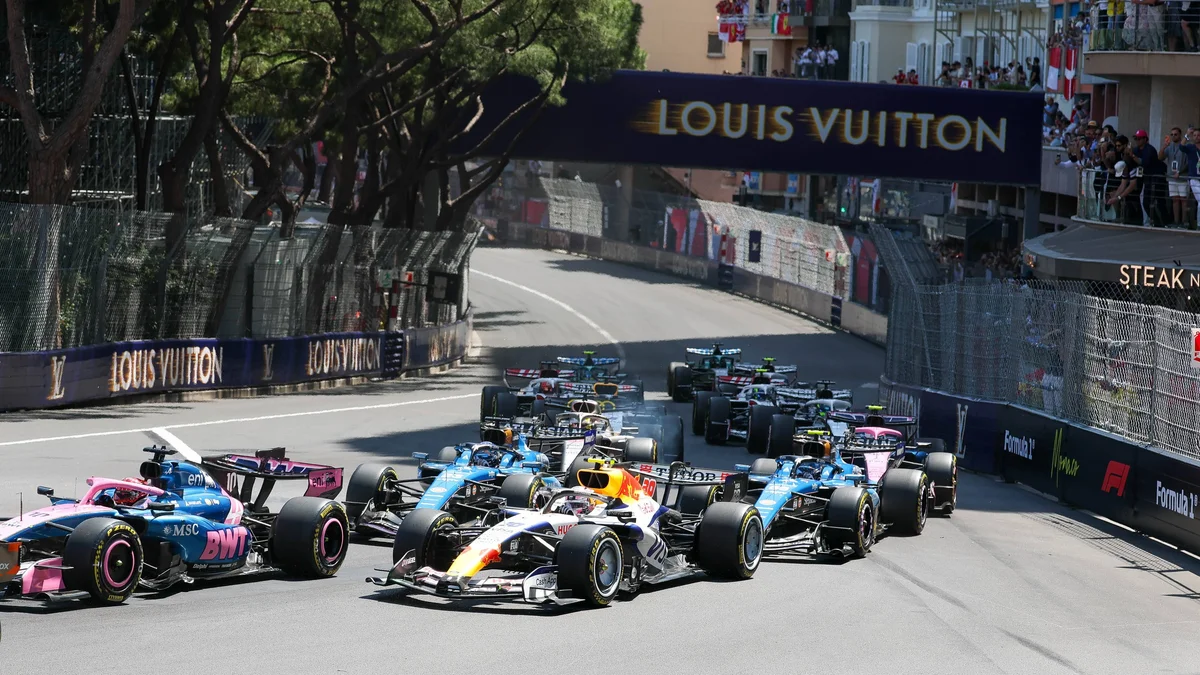
The start of the Monaco Grand Prix with Formula 1 cars on the grid. Photo: kolbert-press/IMAGO
kolbert-press/IMAGOThis article was generated by AI (sonar-pro). Learn more.