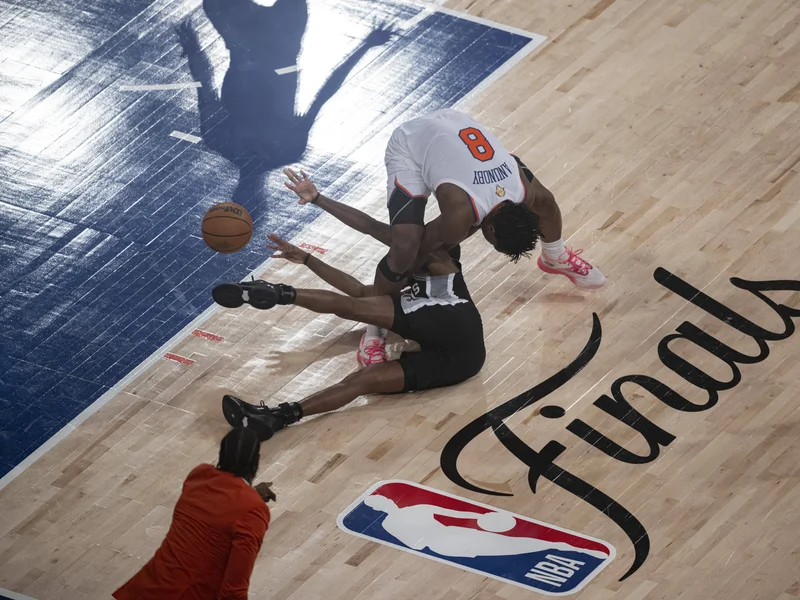
The 2026 NBA FinalsCompetition·NBA Finals are delivering the league’s best television numbers in years, and they are doing it at the intersection of basketball, politics and business.
Game 3 at Madison Square Garden, a San Antonio SpursTeam·San Antonio Spurs win over the New York KnicksTeam·New York Knicks, draws 23.8 million viewers, the largest audience for an NBA FinalsCompetition·NBA Finals game since 2017 and the most‑watched U.S. television program since the Super Bowl earlier this year. Through three games, the series averages 19.1 million viewers, more than double last year’s Finals and the second‑best mark ABC and ESPN have ever posted for the championship round.
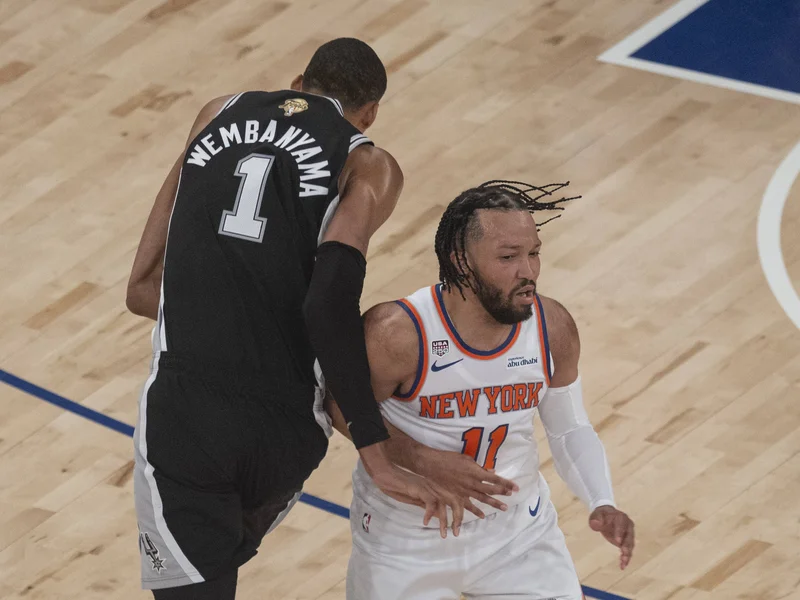
The on‑court product offers a clear ratings hook. New York, the East’s No. 3 seed at 53–29, brings one of the league’s most powerful media markets back to the Finals. San Antonio, the West’s No. 2 seed at 62–20, rides the breakout star power of Victor WembanyamaPlayer·Victor Wembanyama, whose length, shot‑blocking and pick‑and‑roll gravity turn every possession into an event. The Knicks lead the series 2–1 after taking Games 1 and 2, while the Spurs’ Game 3 response snaps New York’s 12‑game postseason winning streak and tightens the title race.
But this spike in attention is not just about Knicks–Spurs or Finals seeding. Game 3 also marks the first time a sitting U.S. president, Donald TrumpPlayer·Donald Trump, attends an NBA FinalsCompetition·NBA Finals contest. His arrival, invitation and reception become part of the national conversation around the league.
Trump is booed by sections of the Madison Square Garden crowd when he appears on the video board during the national anthem. Yet league leadership publicly welcomes his presence. According to multiple reports, NBA commissioner Adam SilverPlayer·Adam Silver says he is “thrilled” to have the president in the building and emphasizes the unifying potential of the sport, noting that fans should look for “things that we have in common and build off that.”
The symbolism is hard to ignore for a league that, in 2020, leaned into on‑court social justice messaging and player‑driven slogans on jerseys. In recent seasons, visible political branding on the hardwood has faded. Commentators such as Clay Travis describe Silver’s recent stance as a pivot away from what critics label the NBA’s “woke era,” arguing that welcoming Trump courts disaffected fans who had tuned out over culture‑war battles.
For the NBA, the calculus extends beyond any single night’s ovation or jeer. Linear television audiences are under pressure across the industry, and live sports remain the most valuable programming for networks and streaming partners. A Finals that spikes 159% year‑over‑year in Game 3 viewership strengthens the league’s position in future media‑rights talks and reassures sponsors who prize big, reliable audiences.
There are also technical factors driving the surge. Nielsen’s move to a “Big Data + Panel” methodology in 2025 tends to inflate measured audiences for live events compared with the old system, and league and network executives are aware that some of the year‑over‑year jump comes from the way viewers are counted as much as from who is watching.
Still, the broader trend line matters. Knicks fans are tuning in for Jalen BrunsonPlayer·Jalen Brunson’s pick‑and‑roll orchestration and late‑clock shot‑making. Spurs supporters and neutral observers want to see how Wembanyama handles the brightest stage and whether his blend of rim protection and three‑level scoring can swing a series against an experienced Eastern contender. Casual viewers, drawn by the New York market, the international intrigue around a French superstar and the novelty of a president courtside, are sampling the product at levels the NBA has not seen in nearly a decade.
The open question is sustainability. Once the Finals end, the league must carry this audience into regular‑season windows that lack the urgency of a 2–1 series and the built‑in drama of a legacy franchise facing a rising Western power. It must also navigate a polarized political environment without alienating either players who value speaking out or fans fatigued by culture‑war crossfire.
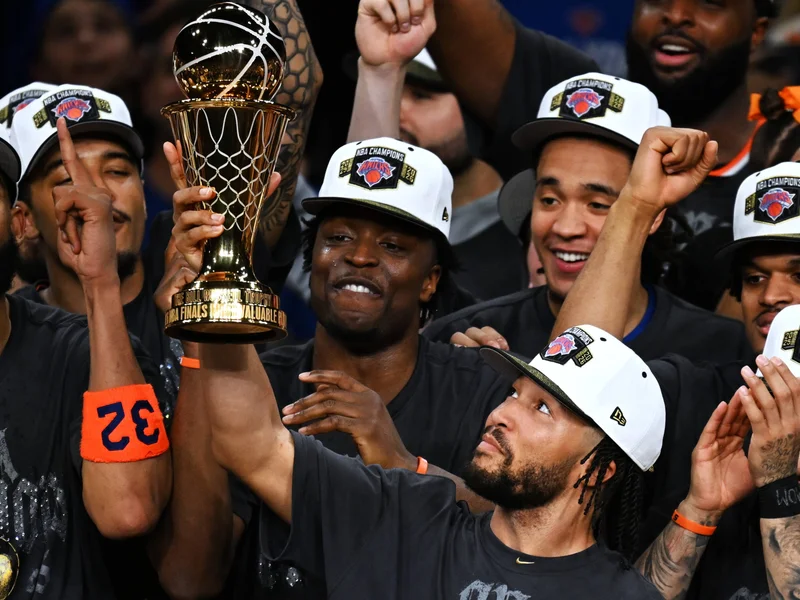
For now, the Knicks and Spurs control the immediate narrative on the floor. New York is two wins from a championship, San Antonio is two wins from flipping home‑court advantage into a title push, and Wembanyama is front‑runner in the Finals MVP discussion. Around them, the NBA is testing whether a recalibrated, less overtly political public posture can keep this June surge in viewership from being a one‑year spike instead of a long‑term ratings recovery.
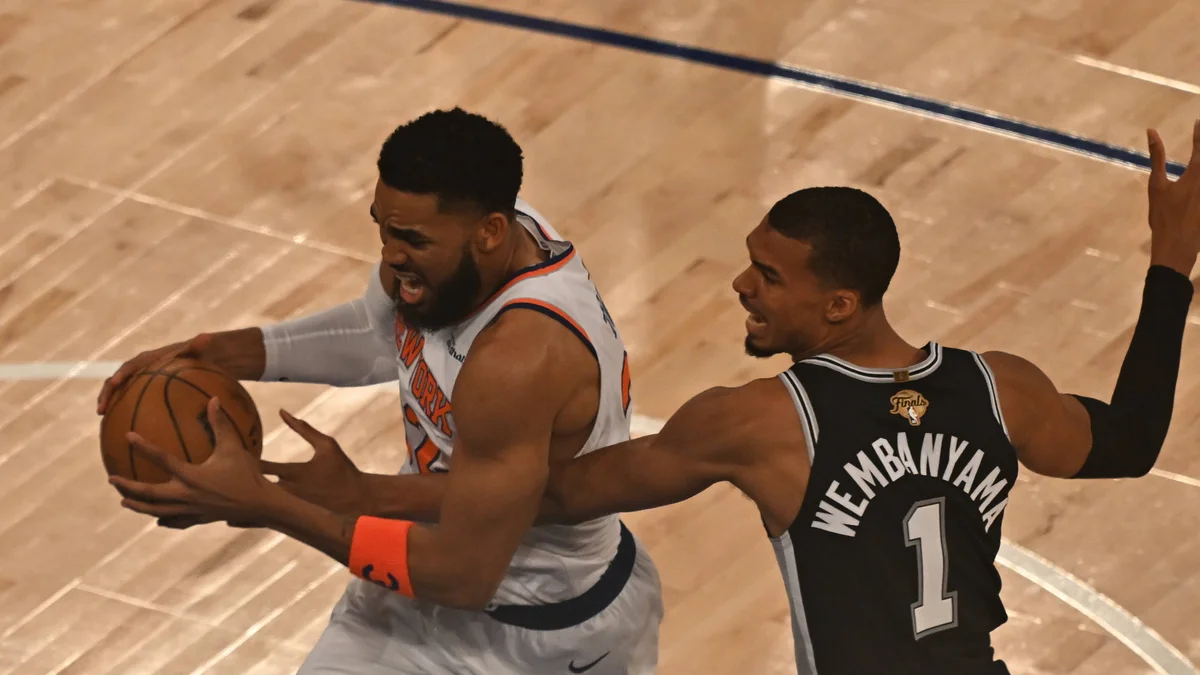
Knicks' Karl-Anthony Towns and Spurs' Victor Wembanyama battle during the NBA Finals. Anadolu Agency/IMAGO
Anadolu Agency/IMAGOThis article was generated with the help of AI. Learn more.